


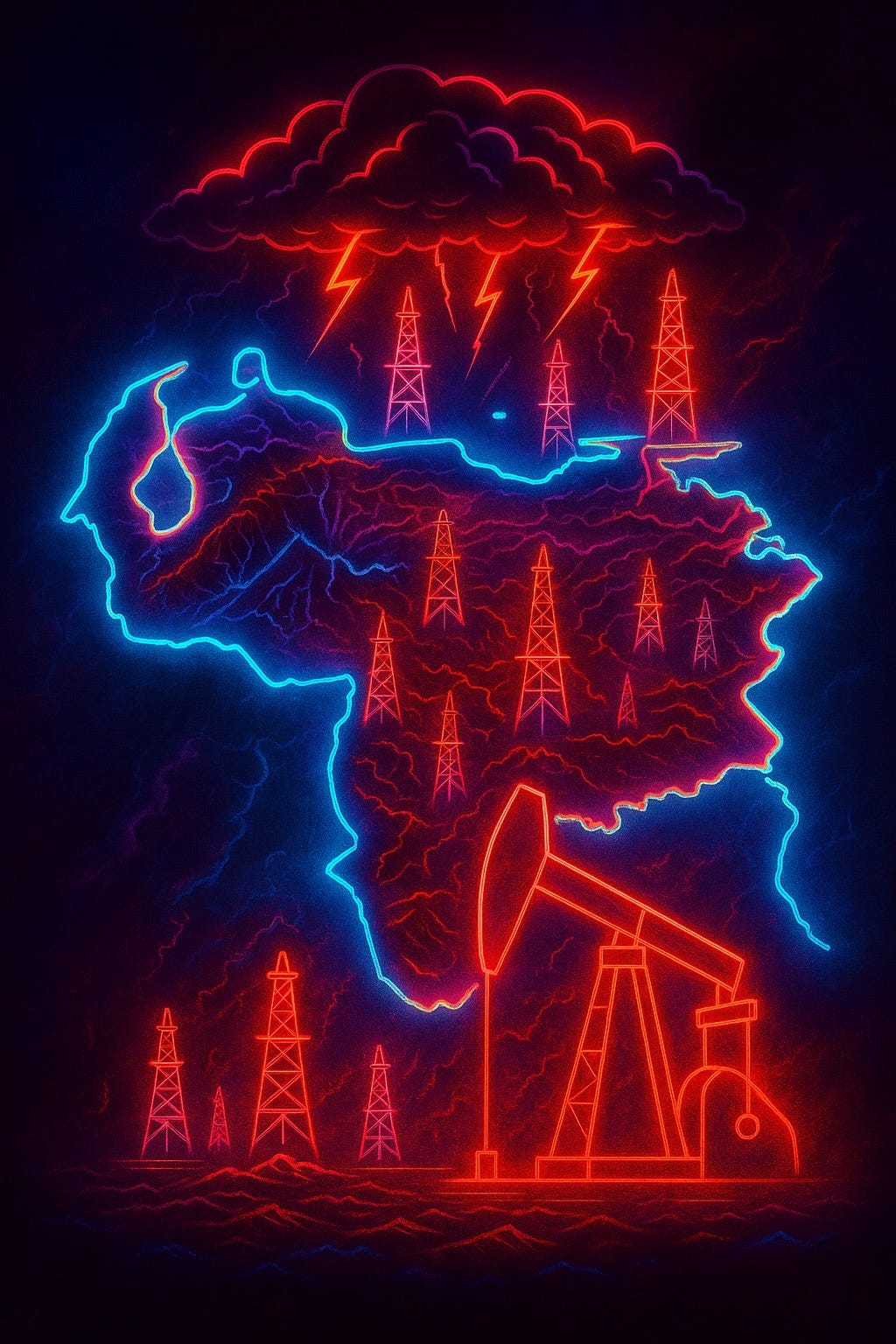
The idea of a U.S. invasion of Venezuela sounds simple to some politicians: take down Maduro, bring democracy, secure the oil. But in reality, it would be one of the most complex, costly, and dangerous campaigns the U.S. could attempt in the Western Hemisphere. Venezuela isn’t Iraq or Libya, it’s a very different battlefield, surrounded by rivals and wrapped in jungles, politics, and proxy interests. Here’s why it would be a disaster in the making.
1. The terrain is a nightmare for modern warfare
Venezuela’s geography is an invading army’s worst enemy. The country is a patchwork of dense jungle, mountains, flooded plains, and heavily urbanized coastlines. Moving troops inland would mean fighting through humidity, disease, and terrain that kills machinery. Cities like Maracaibo and Caracas are natural fortresses: dense, chaotic, and impossible to control without enormous civilian casualties. U.S. forces would face the same problem they did in Fallujah or Mogadishu,an urban maze where every alley becomes a front line.
2. Venezuela’s forces are built for guerrilla war, not conventional defense
The Venezuelan military is a hybrid force. It mixes regular troops with thousands of irregular militias known as colectivos, loyal to local commanders and organized block by block. These groups are integrated into neighborhoods and backed by years of smuggling money and paramilitary experience. They wouldn’t face U.S. troops head-on. They’d melt into the population, ambush convoys, and drag the fight into a long insurgency. Even with outdated weapons, a guerrilla war in Venezuela’s terrain would be exhausting, bloody, and politically costly for Washington.
3. Logistics would be slow, vulnerable, and expensive
Despite its proximity, Venezuela is logistically isolated. U.S. forces would need to build or secure ports and airfields in hostile territory with limited infrastructure. Every supply convoy,from fuel to food to spare parts, would be exposed to sabotage or militia attacks. Venezuela’s size makes it even worse: it’s nearly twice the size of Iraq. Without regional allies providing bases or overflight rights, the U.S. would need a massive naval and air bridge just to sustain the operation. Every extra mile would cost time, money, and lives.
4. The oil fields are a battlefield, not a prize
At first glance, Venezuela’s vast oil reserves look like the reward for intervention. In reality, they’re one of the main reasons an invasion would turn ugly. The oil industry is concentrated in a few fragile zones, especially around Lake Maracaibo and the Orinoco Belt, that are environmentally unstable and politically contested. Heavy fighting in these regions could destroy key infrastructure and cause massive environmental disasters. Refineries, pipelines, and drilling platforms would become both targets and hazards. Even if U.S. forces secured them, restarting production would take years, not months. Instead of funding reconstruction, the oil could become a sinkhole of corruption, sabotage, and ecological collapse.
5. Occupation would lead to chaos, not stability
Even if the U.S. somehow toppled the Maduro regime quickly, the aftermath would be uncontrollable. The country’s institutions are hollowed out, its economy collapsed, and its political divisions run deep. Without a legitimate local government ready to take over, Venezuela would fragment. Factions loyal to Maduro, opposition militias, and drug cartels would all compete for power. The U.S. would be forced into nation-building it can’t afford or sustain politically. It wouldn’t be a liberation, it would be an occupation that slowly drains American resources and credibility.
Bottom Line
An invasion of Venezuela would be quick to start but impossible to finish. The terrain, the logistics, and the complexity of the country’s politics make it a trap for any foreign army. And far from securing oil or influence, it would likely unleash environmental and humanitarian chaos that no one could control. Venezuela is a fragile state sitting on a volatile resource, not a battlefield the U.S. could ever truly win.
Your post inspired this infographic.
Could Venezuela be America's next Vietnam? How many Americans may die fighting there?
https://thedemlabs.org/2025/10/21/venezuela-is-america-next-vietnam-trump-illegal-war/
My take on Machado and Venezuela: https://www.menonpause.info/p/be-careful-what-you-wish-for.